
The Ultimate Guide to Workwear Waterproof Jackets
The Ultimate Guide to Workwear Waterproof Jackets
In demanding work environments, staying dry, comfortable, and visible isn't a luxury, it's a necessity. Reliable waterproof windproof jackets are a critical line of defense against the elements, protecting workers in industries ranging from construction and utilities to transportation and emergency services. The right jacket does more than just keep the rain out; it enhances safety, ensures compliance with regulations, and allows you to focus on the job at hand without distraction.
This guide is designed to serve a dual purpose. First, it provides comprehensive information to help you make an informed decision when purchasing a safety rain jacket. Second, it directs you to the types of high-performance workwear that meet your specific needs. We will cover everything from the advanced technologies that keep you dry to the safety certifications that keep you protected, along with tips on layering, selection, and long-term care.
Understanding Waterproof Technologies for Workwear
When it comes to workwear, not all "waterproof" claims are equal. It's crucial to understand the difference between water-resistant and truly waterproof materials. Water-resistant fabrics can handle light showers for a short period, but they will eventually let water penetrate under sustained rain or pressure. Truly waterproof jackets, on the other hand, are constructed with materials and techniques that create an impenetrable barrier against moisture.
This barrier is typically achieved through advanced membranes or coatings. Materials like Polyurethane (PU) and PVC are common coatings that offer excellent water protection. More advanced options include microporous membranes like GORE-TEX or other proprietary technologies. These membranes contain billions of microscopic pores that are small enough to block liquid water droplets but large enough to allow water vapor (sweat) to escape. This is the key to breathability, a vital feature that prevents overheating and keeps you comfortable during physical labor. A jacket's breathability is often measured by its Moisture Vapour Transmission Rate (MVTR), with higher numbers indicating better performance for strenuous activities.
However, even the best fabric is useless if water can seep through the stitching. That's why fully taped or sealed seams are non-negotiable for complete waterproof protection. This process involves applying a waterproof tape over the seams to block any potential leaks. Finally, a jacket's waterproof capability is quantified by a rating in millimeters (mm). This number comes from a hydrostatic head test, which measures how tall a column of water the fabric can withstand before it leaks. For light rain, 5,000mm may suffice, but for heavy, sustained downpours and demanding job sites, a rating of 10,000mm to 20,000mm is recommended.
Key Features and Certifications for Safety Rain Jackets
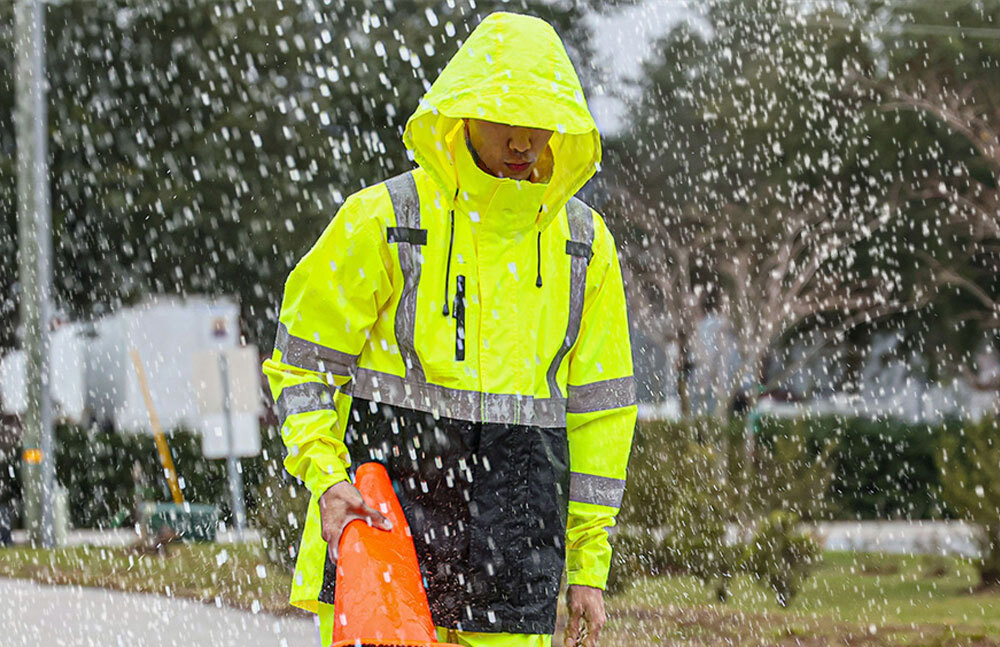
For many jobs, a waterproof jacket must also meet stringent safety standards. High visibility is paramount in environments with moving vehicles or equipment, especially in low-light conditions. The American National Standards Institute (ANSI) sets the standard with ANSI/ISEA 107. This standard classifies garments into different levels, with Class 3 offering the highest level of visibility. A Hi Vis Orange Waterproof Jacket or Hi Vis Yellow Rain Jacket made with fluorescent materials and wide reflective tape is essential for workers needing this level of protection.
In occupations with risks of arc flash or flash fires, such as in the electrical or oil and gas industries, a Flame Resistant Waterproof Jacket is mandatory. These jackets must meet specific performance standards like NFPA 2112 for flash fire protection or ASTM F1506 for arc flash hazards. FR properties are integrated through multi-layer fabric systems where a waterproof membrane is bonded between an FR outer shell and an inner liner, ensuring protection without compromising weather resistance.
Beyond certifications, practical design elements are crucial. A Safety Rain Jacket with Hood should feature an adjustable hood that is compatible with a hard hat and doesn't obstruct peripheral vision. Other vital features include durable, waterproof zippers, storm flaps to cover closures, adjustable cuffs for a secure fit, and ample pocket storage for tools and devices. These details ensure the jacket is not only safe but also functional for daily work.
Building an Effective Workwear Layering System
Staying comfortable and protected in fluctuating weather conditions requires more than just a good outer jacket. An effective layering system allows you to adapt to changes in temperature and your activity level, ensuring you stay warm, dry, and focused. The system is built on three distinct layers that work together for optimal performance.
Layer 1: Base Layer. This is the layer worn next to your skin. Its primary job is not to keep you warm, but to wick moisture (sweat) away from your body to keep you dry. Materials like synthetic polyesters or merino wool are excellent choices. You should avoid cotton, as it absorbs moisture and can leave you feeling cold and damp.
Layer 2: Mid-Layer. The mid-layer is your insulating layer. Its purpose is to trap your body heat to keep you warm. The thickness and material of your mid-layer can be adjusted based on the temperature. Common options for workwear include fleece jackets, insulated vests, or heavy-duty sweatshirts. This layer should still offer some breathability to help transfer moisture from the base layer to the outer shell.
Layer 3: Outer Shell. Your High Visibility Waterproof Jacket or FR jacket serves as the outer shell. This is your shield against the external elements. It blocks wind and rain while allowing the moisture wicked by the inner layers to escape. By adjusting the base and mid-layers, you can use the same protective outer shell in a wide range of conditions, from cool, damp days to frigid, stormy weather.
How to Choose the Best Rain Jacket for Your Job
Selecting the right waterproof work jacket involves balancing job-specific hazards, weather conditions, and personal comfort. Using a systematic approach ensures you invest in gear that provides reliable protection and value. This checklist will guide you through the essential factors to consider before making a purchase.
- Work Environment: Assess the specific risks of your job site. Do you work near traffic? Are there fire or chemical hazards? This will determine the necessary safety certifications.
- Weather Conditions: Consider the typical climate. Do you face light drizzles or heavy, wind-driven downpours? This will influence the required waterproof rating (mm).
- Required Certifications: Verify if you need ANSI/ISEA 107 for high visibility or FR ratings like NFPA 2112 or ASTM F1506 for flame resistance.
- Material & Durability: Look for robust fabrics like Oxford polyester that can withstand abrasion and tearing. Reinforced seams and high-quality zippers are also key indicators of a durable jacket.
- Fit & Mobility: Ensure the jacket allows a full range of motion. Features like articulated sleeves can enhance mobility without sacrificing protection. Remember to account for layers you might wear underneath.
- Features: Evaluate the practicality of features like a stowable or helmet-compatible hood, adjustable cuffs, storm flaps, and the number and placement of pockets.
- Comfort: Prioritize breathability to prevent overheating during physical work. A lightweight design and vented back can significantly improve comfort over a long shift.
To further aid your decision, the table below compares common types of safety jackets:
| Jacket Type | Waterproof Rating | Key Features | Certifications | Best Use Case |
|---|---|---|---|---|
| Hi Vis Yellow/Orange Rain Jacket | 10,000mm - 20,000mm | Fluorescent material, 360-degree reflective tape, adjustable hood, sealed seams. | ANSI/ISEA 107 Class 2 or 3 | Roadside construction, utility work, and any environment with moving vehicle traffic. |
| Flame Resistant Waterproof Jacket | 10,000mm+ | FR-treated outer shell, waterproof membrane, sealed seams, non-conductive hardware. | NFPA 2112, ASTM F2733 (Flash Fire); ASTM F1891 (Arc Flash). | Oil & gas industry, electrical utilities, chemical plants, and other hazardous environments. |
| General Workwear Rain Jacket | 5,000mm - 15,000mm | Durable outer fabric (e.g., ripstop), multiple storage pockets, reinforced high-wear areas. | N/A (unless also Hi-Vis) | Landscaping, agriculture, and general construction where specific visibility or FR standards are not required. |
Care and Maintenance for Your Waterproof Work Jacket
How should I wash my waterproof work jacket?
Always check the manufacturer's care label first. Generally, it's best to wash the jacket in cool or warm water on a gentle cycle. Use a detergent specifically designed for technical outerwear, as standard detergents can break down the waterproof coatings. Never use fabric softeners, bleach, or harsh chemicals, as they can damage the membrane and reflective tapes.
Can I re-waterproof my jacket, and how often?
Yes. Most waterproof jackets are treated with a Durable Water Repellent (DWR) finish that causes water to bead up and roll off. Over time, dirt, oil, and regular wear can cause this finish to degrade. You'll know it's time to re-treat when water starts soaking into the outer fabric rather than beading off. You can restore the DWR using a spray-on or wash-in treatment after cleaning the jacket thoroughly.
How should I store my jacket to maintain its integrity?
Ensure the jacket is completely clean and dry before storing it. Hang it loosely in a cool, dry place away from direct sunlight. Avoid compressing the jacket for long periods, as this can damage the waterproof membrane and wrinkle the reflective materials. Proper storage prevents mildew and preserves the fabric's technical properties.
What should I do if my jacket gets a tear or puncture?
For small rips or punctures, you can use specialized waterproof repair tape or patches. These provide a durable, flexible, and waterproof seal that can significantly extend the life of your jacket. For larger tears or damage to seams, it may be best to consult a professional repair service that specializes in technical outerwear.
How do I extend the overall lifespan of my safety rain jacket?
The key to longevity is regular and proper care. Clean your jacket when it gets dirty to prevent grime from degrading the fabric and DWR coating. Re-apply the DWR treatment as needed to maintain performance. Address small tears promptly before they become bigger problems. By combining proper cleaning, storage, and minor repairs, you can maximize the lifespan of your investment.