
ANSI Class 2 Sweatshirts

ANSI Class 2 Hi-Vis Sweatshirts - Hoodies & Crewnecks
ANSI/ISEA 107 Class 2 hi-vis sweatshirts bring certified roadway visibility to cold-weather workwear — the same minimum standard required for workers exposed to vehicle traffic at roughly 25 to 50 mph, extended into a fleece or cotton-blend sweatshirt that provides genuine warmth alongside reflective tape coverage. They're the practical choice when a lightweight hi-vis t-shirt isn't enough for cool or cold conditions, but a full insulated jacket may feel like overkill for moderate fall or spring temperatures.
Our Class 2 sweatshirt collection includes four core styles, each suited to different preferences and conditions:
- Pullover hoodies — the most popular style; an attached hood adds warmth for head and neck in cold or wet conditions without the need for a separate hat.
- Zip-front hoodies — same warmth as a pullover with the added convenience of a full-zip front, making it easy to layer over a base shirt or remove mid-task when temperatures shift.
- Crewnecks — a collarless pullover with no hood, offering a slightly cleaner silhouette and marginally better freedom of movement around the neck, often preferred by workers who find hoods restrictive while wearing hearing protection or hard hats.
- Classic styles — zip-front or button designs with a more uniform appearance, suited to customer-facing roles or sites with stricter dress standards.
Every certified garment meets the Class 2 minimums of 775 square inches of fluorescent background material and 201 square inches of retroreflective tape, verified by the sewn-in ANSI/ISEA 107 label. Fluorescent yellow-green and orange-red colorways are available. Use the filters on this page to sort by style, color, and brand. For Class 2 sweatshirts with an X-back reflective pattern, see our X-Back Hi-Vis Sweatshirts collection, and for maximum cold-weather coverage requiring Class 3, see our ANSI Class 3 Sweatshirts.
- Product
- Qty in Cart
- Quantity
- Price
- Subtotal
-
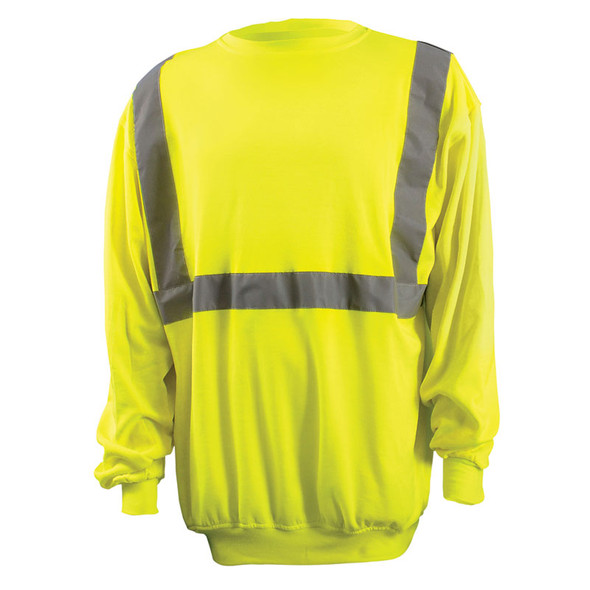

Occunomix Class 2 Hi Vis Yellow Crew Neck Sweatshirt LUX-SWTL
OccuNomix
$27.45The LUX-SWTL by Occunomix is an ANSI Class 2 high visibility, yellow crew neck sweatshirt. Made with a 50% Polyester / 50% Cotton blend, this breathable lightweight crew neck is made with 5.89 oz...$27.45 -
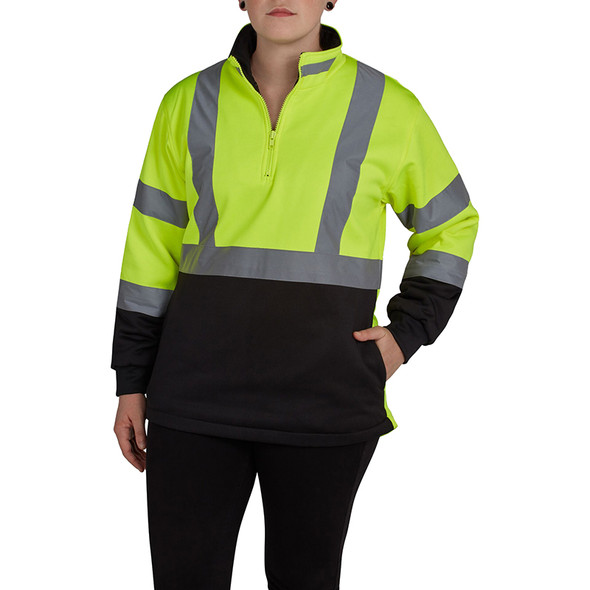

Utility Pro Class 2 Hi Vis Yellow Ladies Black Bottom 1/4 Zip Pullover with Teflon Protector UHV667
Utility Pro
MSRP: $54.99$53.48The UHV667 by Utility Pro is an ANSI Class 2 high visibility ladies pullover. This garment features Teflon Fabric Protector, making it liquid and stain repellent. The contrasting black bottom helps...MSRP: $54.99$53.48 -
On Sale

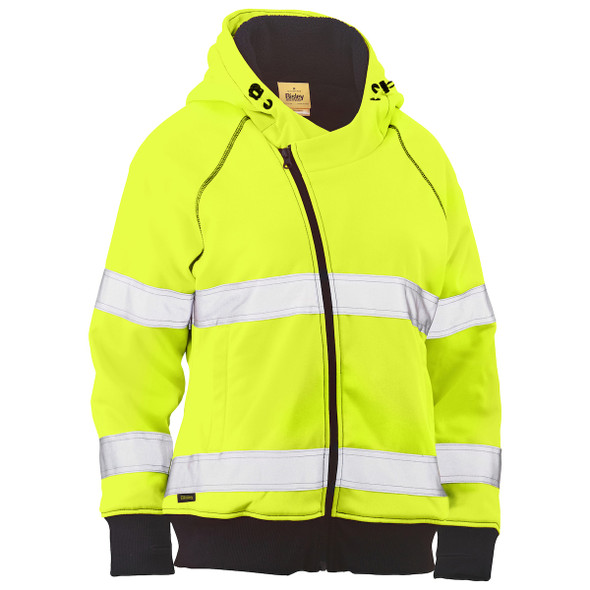
Bisley® ANSI Type R Class 2 Women's Contoured Full Zip Hooded Sweatshirt with Sherpa Lining W6819T
PIP
Now: $72.00Was: $75.10Bisley® ANSI Type R Class 2 Women's Contoured Full Zip Hooded Sweatshirt with Sherpa Lining W6819T Features: ANSI Type R Class 2 Polyester fleece outer with Sherpa fleece lining Distinctive...Now: $72.00Was: $75.10 -

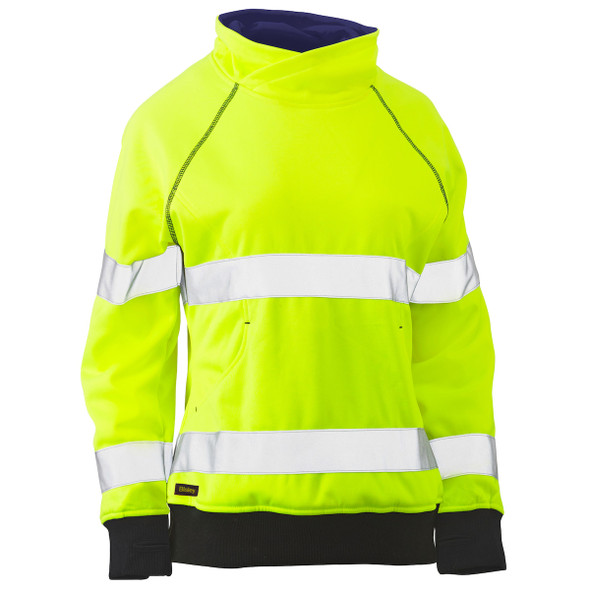
Bisley® ANSI Type R Class 2 Women's Contoured Fleece Pullover Sweatshirt W6818T
PIP
$45.06Bisley® ANSI Type R Class 2 Women's Contoured Fleece Pullover Sweatshirt W6818T - Ideal for construction, survey crews, utilities, shipyards, railyards and anywhere high visibility is needed...$45.06
ANSI Class 2 Hi-Vis Sweatshirts — Frequently Asked Questions
Yes, provided the sweatshirt itself carries the required ANSI/ISEA 107 Class 2 certification and is worn as the outermost layer. An ANSI-certified sweatshirt meets the same background material and retroreflective tape requirements as a certified vest of the same class — the garment type doesn't affect compliance, only whether the garment has been tested and certified. The advantage of a sweatshirt over a vest is built-in warmth without needing to layer separately. The critical requirement is that the certified garment must be the visible outermost layer — wearing a certified sweatshirt under a non-certified jacket defeats the visibility purpose entirely.
Choose a pullover hoodie for maximum warmth and simplicity — the hood adds meaningful protection for the head and neck during cold or wet outdoor shifts. Choose a zip-front hoodie if you frequently layer over a base shirt or need to ventilate quickly when physical activity heats you up — the full zip lets you manage warmth without removing the garment entirely. Choose a crewneck if you find hoods inconvenient when wearing a hard hat, hearing protection, or other head equipment, or simply prefer a cleaner fit around the neck. ANSI compliance isn't affected by which style you choose — all three can be certified to the same class.
The ANSI/ISEA 107 standard tests garments in their standard wearing configuration — a hood worn up can slightly reduce visible retroreflective tape area on the upper back and shoulders, since some tape may be obscured by the hood fabric. However, this is generally factored into garment design for certified styles, and a certified garment with hood deployed is still compliant since the class certification accounts for normal wearing configurations. If maximum retroreflective visibility from behind is critical to your work conditions (for example, when working with your back to high-speed traffic), wearing the hood down or choosing a crewneck style keeps the full back tape area visible at all times.
Turn the sweatshirt inside out before washing — this protects both the fluorescent fabric surface and the reflective tape from direct agitation against the drum. Wash in cold water on a gentle cycle using a mild detergent. Avoid fabric softener, which can leave a coating on the tape surface and reduce reflective performance over time. Tumble dry on low heat or air dry; high heat can cause the tape to delaminate or curl at the edges, and repeated high-heat drying accelerates fading of the fluorescent fabric. Inspect the tape periodically — peeling, lifting, or cracking at the edges indicates the tape is degrading and the garment should be replaced when the reflective performance no longer meets your site's requirements.
Consider upgrading to Class 3 when your work involves traffic speeds above 50 mph, night shifts with reduced ambient lighting, poor weather conditions that reduce driver visibility (rain, fog, snow), or tasks where you regularly face away from traffic and can't monitor approaching vehicles. In cold weather, Class 3 sweatshirts are particularly well-suited to night highway work where warmth and maximum visibility must coexist in a single garment. If in doubt about the required class, the general guidance from safety professionals and standards bodies is to choose the higher class — no one has ever been penalized for exceeding the minimum visibility requirement.