
ANSI Class 3 Vests
ANSI Class 3 Safety Vests - Maximum Highway Visibility
ANSI/ISEA 107 Class 3 safety vests provide the highest level of certified visibility for vests in our collection — required for workers facing highway speeds above 50 mph, night shifts, and reduced-visibility conditions like fog, rain, or snow. Class 3 garments require a minimum of 1,240 square inches of fluorescent background material and 310 square inches of retroreflective tape — substantially more coverage than Class 2.
An important nuance for Class 3 vests specifically: the ANSI/ISEA 107 standard requires Class 3 garments to extend reflective material onto the arms, which a standard sleeveless vest cannot do on its own. Class 3 vests in this collection achieve full compliance through one of two approaches: vests with attached or zip-on sleeves (converting the vest into full arm coverage), or vests paired with a separate certified base layer (such as a Class E-rated bottom garment, or being worn in combination with other certified upper-body garments that together meet the full requirement). Always check the specific product description to confirm how a given "Class 3 vest" achieves its arm coverage requirement.
Our Class 3 vest collection includes mesh and solid polyester construction, breakaway and standard closures, and surveyor-style pocket configurations. Use the filters on this page to sort by material, sleeve configuration, and brand. For traffic speeds below 50 mph, see our ANSI Class 2 Safety Vests collection instead.
- Product
- Qty in Cart
- Quantity
- Price
- Subtotal
-
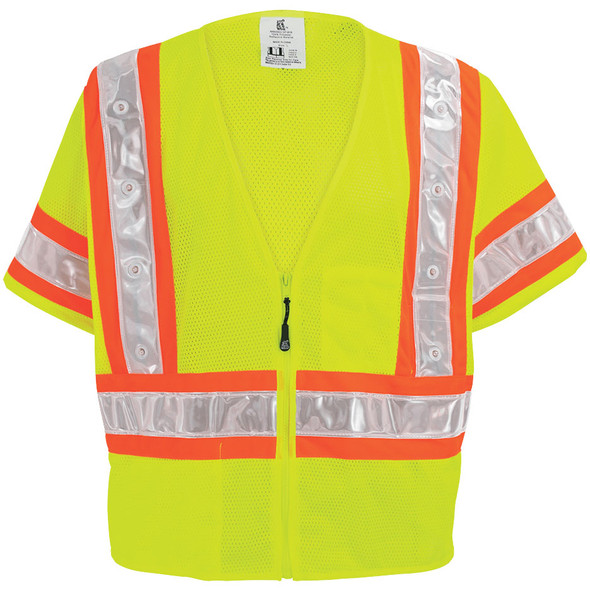
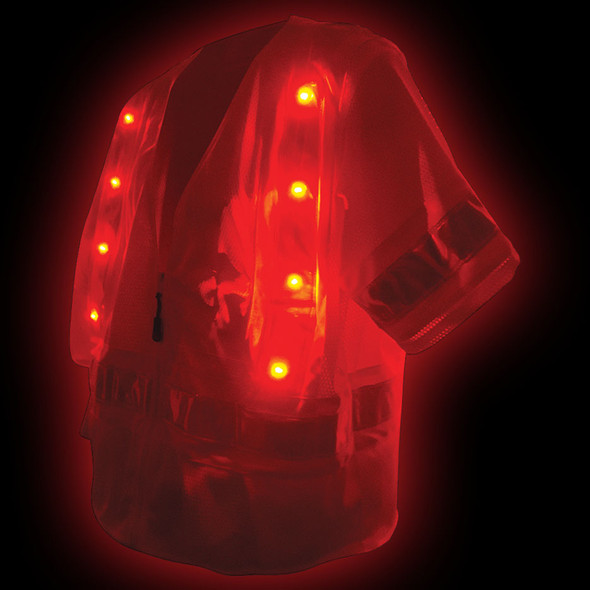
FrogWear® LED Illuminated Class 3 Hi Vis Yellow Safety Vest GLO-12LED
Global Glove
$42.61The FrogWear® HV Lightweight Mesh Safety LED Vest - GLO-12LED by Global Glove is an ANSI Class 3 high visibility light up safety vest. ANSI class 3 high-visibility yellow/green LED vest. ORALITE® reflective material with contrasting orange...$42.61
ANSI Class 3 Safety Vests — Frequently Asked Questions
This is a genuinely common point of confusion. A truly sleeveless vest, worn alone, cannot meet the Class 3 arm-coverage requirement — the standard requires retroreflective material on the arms so a driver can identify the worker's full human silhouette and movement from a distance. Products labeled "Class 3 vest" typically achieve compliance through attached sleeves (zip-on or permanently attached arm coverage built into the vest design) or by being worn in combination with another certified garment that covers the arms, such as a long-sleeve Class 2 shirt with the vest layered over it, where the combined ensemble meets the Class 3 standard. Always verify exactly how a specific "Class 3 vest" achieves arm coverage before assuming a standard sleeveless vest alone is fully Class 3 compliant.
Class 3 is required for traffic speeds above 50 mph, nighttime work, and poor weather conditions (rain, fog, snow) that reduce driver visibility. It's also appropriate for roles requiring sustained close attention to tasks rather than continuous traffic monitoring — flaggers being the clearest example. The Federal Highway Administration mandates Class 3 apparel for all workers in the right-of-way of federal-aid highways when traffic exceeds 50 mph. If your job site conditions are unclear or variable, choosing Class 3 is always an acceptable conservative choice even where Class 2 might technically suffice.
A garment or ensemble is either certified to meet Class 3 requirements or it isn't — wearing a Class 2 vest with separate sleeve attachments only achieves Class 3 compliance if the manufacturer has specifically tested and certified that combination together. Mixing and matching uncertified components, even if each individually carries some ANSI label, does not automatically add up to Class 3 compliance. If Class 3 is required for your work, purchase a garment or ensemble explicitly labeled and certified as Class 3 — don't assume that adding generic sleeves to any Class 2 vest achieves the same result.
Class 3 vests with attached sleeves do have more fabric coverage than a sleeveless Class 2 vest, which can mean slightly less airflow. However, many Class 3 styles use lightweight, moisture-wicking mesh polyester specifically to offset this — look for "mesh" or "moisture-wicking" in the product description for the best hot-weather comfort. If extreme heat is a major concern and Class 3 is required, prioritize breathable mesh construction over solid polyester to minimize the comfort tradeoff while maintaining compliance.
Yes, provided the vest (or vest-and-sleeve combination) fits comfortably over the coat without restricting movement or compressing the reflective tape area. Size up if needed — many Class 3 vests are cut with extra room specifically to accommodate winter layering. The certified garment must remain the visible outer layer; if a winter coat is worn on top of the vest instead of underneath, it covers the certified visibility and the ensemble is no longer compliant regardless of the vest's own certification.