
ANSI Class 3 Sweatshirts

ANSI Class 3 Hi-Vis Sweatshirts - Maximum Cold-Weather Visibility
ANSI/ISEA 107 Class 3 sweatshirts solve a specific cold-weather challenge: delivering the highest level of certified visibility in a warm, comfortable garment suitable for extended outdoor shifts. Class 3 requires a minimum of 1,240 square inches of fluorescent background material and 310 square inches of retroreflective tape — the stricter of the two common field classes — with the reflective coverage extending onto the arms and sleeves so a worker is recognizable as a human figure from a distance in any body position, not just when standing upright.
This class is required for workers facing the highest-risk conditions: highway speeds above 50 mph, night shifts with reduced ambient lighting, fog, rain, or snow that reduces driver reaction time, and roles where full attention to approaching traffic isn't always possible. Flaggers, highway construction crews, expressway maintenance workers, and utility workers near high-speed roads are the core Class 3 wearers — and in colder months, a certified Class 3 sweatshirt or hoodie allows them to stay visible and warm in a single compliant garment rather than relying on separate hi-vis outer layers over base clothing.
Our Class 3 sweatshirt collection includes pullover hoodies, zip-front hoodies, and crewneck styles — all with the increased reflective tape coverage across the full sleeve required for Class 3 certification. Available in fluorescent yellow-green and fluorescent orange-red. Use the filters on this page to sort by style, color, and brand. For lower-risk environments at traffic speeds below 50 mph, see our ANSI Class 2 Sweatshirts collection instead.
- Product
- Qty in Cart
- Quantity
- Price
- Subtotal
-
On Sale

MAX Apparel Class 3 Pullover Heavyweight Hoodie Sweatshirt MAX630
MAX Apparel
MSRP: $54.89Now: $49.95Was: $54.89MAX Apparel Class 3 Pullover Heavyweight Hoodie Sweatshirt – MAX630 - The MAX Apparel Class 3 Pullover Heavyweight Hoodie Sweatshirt MAX630 is built for professionals who need dependable visibility, serious warmth, and long-lasting...MSRP: $54.89Now: $49.95Was: $54.89 -
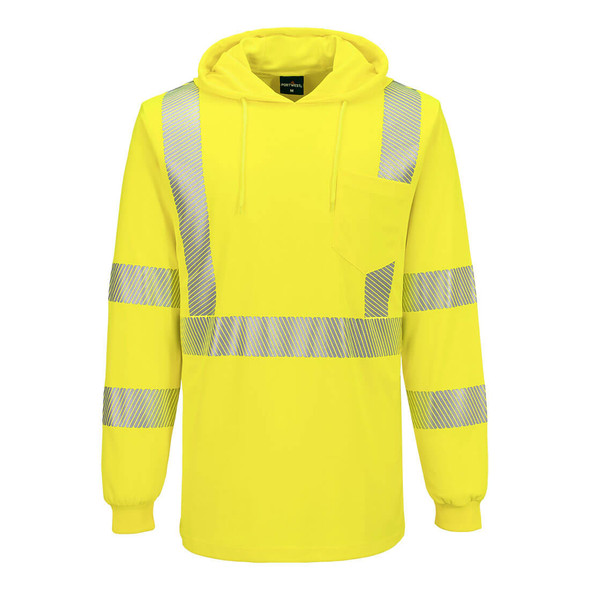
Portwest Hi-Vis Lightweight Hooded T-Shirt Long Sleeve Orange Yellow L042
Portwest
$27.98Portwest Hi-Vis Lightweight Hooded T-Shirt Long Sleeve Orange Yellow L042 - A staple in any collection, this Long Sleeve Hi-Vis Lightweight T-Shirt uses a lightweight moisture wicking polyester fabric for breathability and comfort. Features include...$27.98 -
On Sale


PortWest Class 3 Hi Vis Yellow with Black Trim Full Zip Sweatshirt PW370
Portwest
Now: $78.00Was: $97.00The PW370 by PortWest is a ANSI Class 3 high visibility yellow with black trim, full zipper sweatshirt. Made with 100% 280g Polyester, this sweatshirt features elasticated rib waistband and cuffs. There is 1 chest pocket with zipper closure and 2 lower...Now: $78.00Was: $97.00
ANSI Class 3 Hi-Vis Sweatshirts — Frequently Asked Questions
ANSI/ISEA 107 Class 3 requires retroreflective material to cover not just the torso but also the arms, so a driver can identify the worker as a human figure — and read the direction of their movement — from a greater distance and in any body position. This concept, called biomotion, is critical at high traffic speeds where a driver has less time to react: recognizing a moving human shape from 500+ feet away requires that the reflective pattern outline the whole body, not just the chest and back. Class 2 tape coverage on the torso alone doesn't achieve this at the distances and speeds Class 3 is designed for.
Yes, provided it is the outermost garment and carries the ANSI/ISEA 107 Class 3 certification label. A certified Class 3 sweatshirt meets the same visibility requirements as a certified Class 3 vest or jacket — the garment type doesn't change the compliance status, only whether the specific garment is certified. The most common mistake is layering a non-certified jacket or rain shell over a certified sweatshirt, which covers the compliant garment and removes the visibility protection. For cold or wet conditions requiring an additional outer layer, choose a certified Class 3 rain jacket or insulated jacket that itself meets the required class.
Both can carry the same ANSI/ISEA 107 Class 3 certification if they meet the background material and retroreflective tape requirements. The difference is construction and warmth: a sweatshirt uses fleece or cotton-blend fabric for warmth through the fabric itself — breathable and comfortable for sustained wear in cool-to-cold conditions, but less water-resistant than a dedicated jacket. A hi-vis jacket typically offers a weather shell (water-resistant or waterproof outer layer), heavier insulation, and features like storm flaps, sealed zippers, and wrist cuffs designed for harsher conditions. A sweatshirt is the right choice for dry, moderate cold and active work; a jacket is the right choice when significant rain, wind, or extreme cold is a factor.
No — the ANSI/ISEA 107 standard does not count a deployed hood as part of the certified garment's reflective tape measurement. The background material and retroreflective tape requirements are assessed based on the garment body and sleeves, not accessories like a hood. A certified Class 3 hoodie meets its certification requirements based on the torso and sleeve tape coverage alone, independent of whether the hood is up or down during use. The hood itself may have reflective elements on some styles as a bonus feature, but these aren't part of the compliance calculation.
ANSI/ISEA 107-2020 removed the previous requirement for manufacturers to list maximum wash cycles on the care label, since wash cycles were measured against reflective tape life rather than the full garment, which caused confusion about total garment depreciation. The current approach is condition-based: replace a hi-vis sweatshirt when the fluorescent fabric appears noticeably faded, gray, or washed out compared to a new garment of the same color, or when the retroreflective tape shows peeling, cracking, or significantly reduced night reflectivity. Workers who wear hi-vis sweatshirts in outdoor, high-exposure conditions daily typically replace annually; less frequent use can extend the usable life. Following proper care instructions — cold wash, gentle cycle, no fabric softener, low-heat drying — significantly extends the garment's compliant service life.