
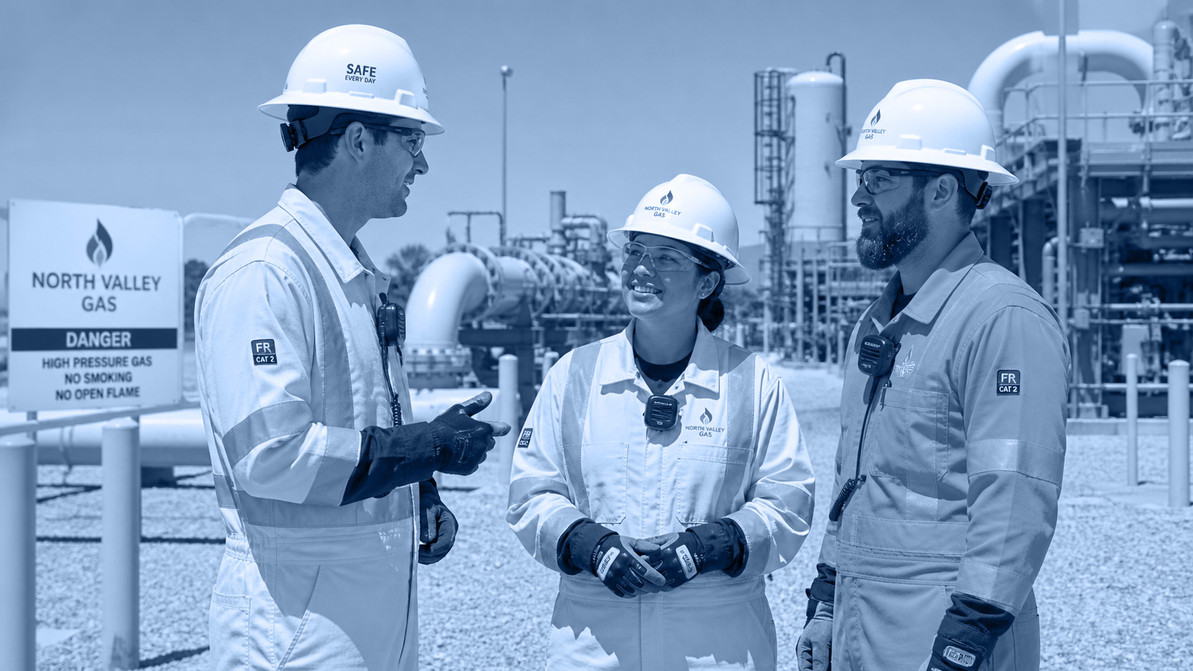
FR Clothing Selection Guide by Industry
Why FR Clothing Is Not One-Size-Fits-All
Flame resistant (FR) clothing is required wherever workers face exposure to flash fire, arc flash, or electric arc hazards. But beyond that broad mandate, the specific garments, arc ratings, and fabric weights your crew needs depend almost entirely on your industry, your job tasks, and the hazards unique to your work environment.
A utility lineman working on energized transmission lines faces different thermal hazards than a pipeline welder or a highway construction flagger working near welding operations. Choosing FR clothing based on a general catalog, rather than your industry's specific standards and hazard profile, means your workers may be under-protected or wearing garments that are far heavier and hotter than necessary.
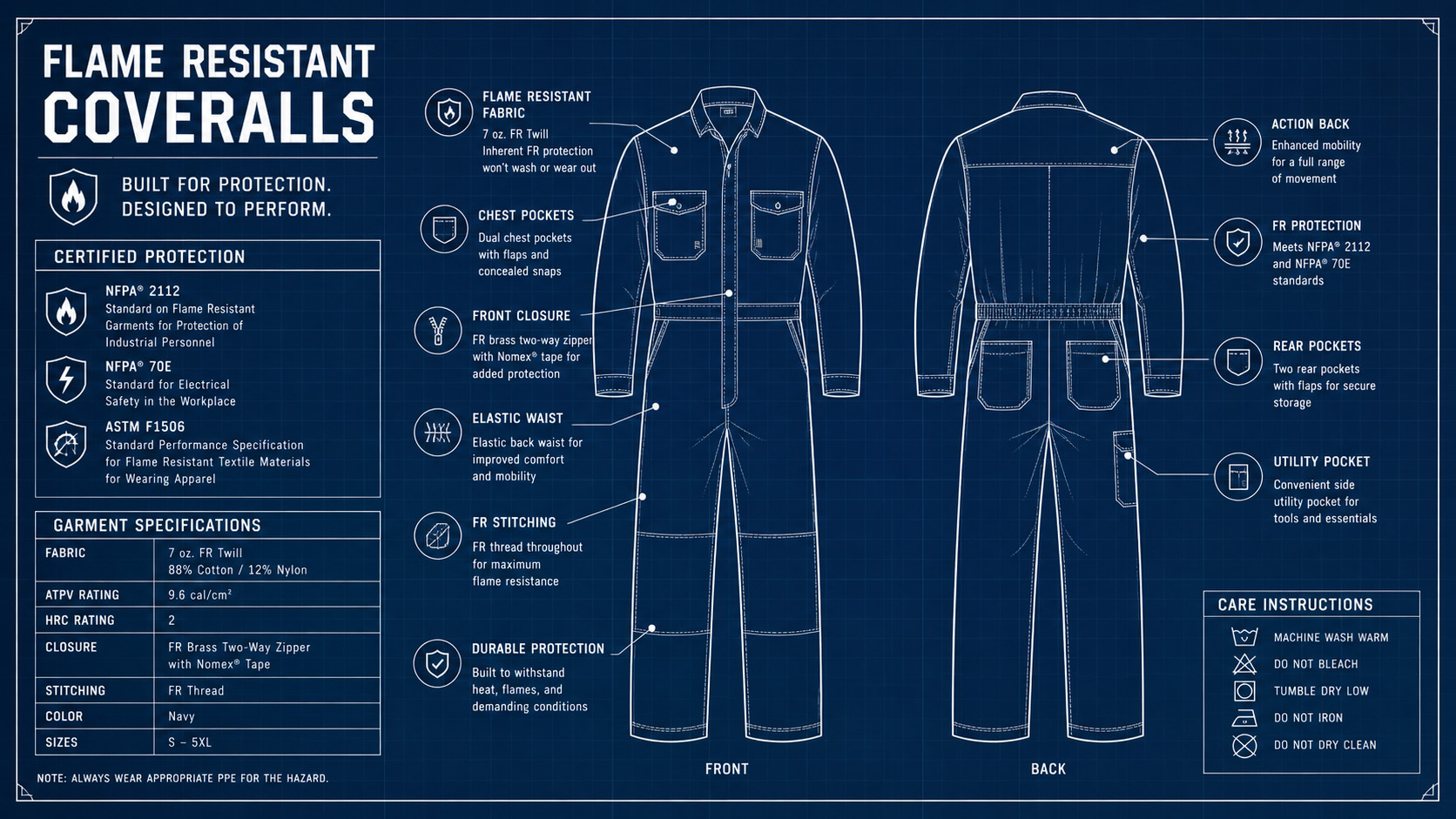
This guide breaks down FR clothing selection for three of the most common FR-regulated industries: construction, oil and gas, and utilities. For each, we cover the governing standards, the key hazard types, the garment categories you need, and specific products available at Safety Smart Gear.
Downloads: Word Doc or Adobe PDF
|
Who this guide is for: Safety managers, site supervisors, procurement teams, and anyone responsible for outfitting workers in FR-regulated environments. Whether you're building a program from scratch or updating an existing one, use this as your starting checklist. |
FR Standards You Need to Know
Before diving into industry-specific guidance, here's a quick-reference table of the key standards that govern FR clothing selection across industries. Understanding which standards apply to your environment is the first step in any compliant FR program.
|
Standard |
Hazard Type |
Industry |
Key Requirement |
|
NFPA 70E |
Arc Flash |
Construction, Utilities, Oil & Gas (electrical) |
HRC/CAT 1–4 rating |
|
NFPA 2112 |
Flash Fire |
Oil & Gas, Petrochemical, Chemical plants |
Flame resistance + limited heat transfer |
|
NFPA 2113 |
Flash Fire Selection |
All flash-fire industries |
Garment selection / program management |
|
ASTM F1506 |
Arc Flash Fabric |
Electrical work environments |
Fabric arc-rating performance |
|
OSHA 29 CFR 1910.269 |
Electric Power |
Utilities, Power generation |
PPE requirements for high-voltage work |
Note: Standards are periodically updated. Always reference the current edition when building or auditing your FR program.
|
Construction Welding, hot work, electrical hazards on active job sites |
Primary Hazards
Construction sites present a mix of thermal hazards depending on the specific trade and task. The most common FR triggers in construction are:
- Arc flash from electrical work — Electricians, panel workers, and anyone near energized equipment face arc flash exposure governed by NFPA 70E.
- Flash fire from welding and hot work — Welders, pipefitters, and ironworkers work near open flame and arc. NFPA 2112 and ASTM F1506 apply.
- Molten metal splash — Welding and cutting operations generate spatter that can ignite standard synthetic workwear instantly.
- Flammable material proximity — Construction sites often have fuel tanks, adhesives, and other ignition sources nearby.
Applicable Standards
- NFPA 70E — Arc flash PPE table requirements for electrical workers. PPE Category 1 requires minimum 4 cal/cm² arc-rated clothing.
- OSHA 29 CFR 1910.132 — General PPE requirements; hazard assessment determines FR necessity.
- ASTM F1506 — Standard for arc flash-rated fabric performance used in clothing selection.
- AWS D1.1 / Welding codes — Welders must wear FR clothing that resists ignition from spatter and open flame.
What to Look For in Construction FR Gear
- Arc rating: Minimum HRC/CAT 1 (4 cal/cm²) for most electrical work; CAT 2 (8 cal/cm²) for panel work and higher-risk tasks.
- Fabric: 100% cotton FR, Nomex®, or FR-treated cotton blends. Avoid untreated synthetic blends — they melt under heat.
- Layering compatibility: Base layers, shirts, and outerwear must all be FR or inherently non-melting. Non-FR underlayers can still cause burns even when covered.
- Hi-Vis combination: Workers near traffic who also need FR should wear FR hi-vis clothing — not a standard hi-vis vest over FR base layers.
- Durability: Construction environments are hard on clothing. Look for reinforced seams, FR-compliant hardware (non-sparking zippers, no exposed metal).
Recommended FR Categories for Construction
|
FR Shirts & Base Layers: Everyday FR compliance for electricians and welders. Ideal for warm weather or as a compliant base under outerwear. Browse: FR Shirts | FR T-Shirts | FR Base Layers |
|
FR Coveralls: Full-body protection for welders, pipefitters, and workers handling molten metal or open flame. Single-piece design eliminates gap exposure at the waist. Browse: FR Coveralls |
|
FR Pants & Bibs: Compliant lower-body protection for workers who need FR shirts but separate pants — or a bib for overhead welding. Browse: FR Pants | FR Bibs & Overalls |
|
FR Hi-Vis Clothing: When your workers need both ANSI hi-vis compliance and FR protection — don't layer; wear a purpose-built FR hi-vis garment. Browse: FR Hi-Vis Clothing |
|
FR Accessories: Complete the system. Gloves, balaclavas, hard hat liners, and sleeves must also be FR-compliant in high-exposure tasks. Browse: FR Gloves | FR Balaclavas | FR Hard Hat Liners | FR Sleeves |
|
Oil & Gas Flash fire, hydrocarbon ignition, and petrochemical exposure |
Primary Hazards
Oil and gas workers operate in one of the most FR-regulated environments in any industry. The hydrocarbon-rich atmosphere at wellsites, refineries, and pipeline operations creates a persistent flash fire risk that demands full-body FR compliance — not just FR shirts.
- Flash fire from hydrocarbon release — The primary driver of FR requirements in this industry. NFPA 2112 is the governing standard for flash fire protective garments.
- Arc flash from electrical equipment — Refineries and processing facilities have extensive electrical infrastructure. NFPA 70E applies to electrical workers.
- Hydrogen sulfide (H₂S) environments — While not a burn hazard itself, H₂S zones often overlap with high flash fire risk.
- Combustible dust and vapor — Tank cleaning, loading operations, and confined space work create ignition risk from static, sparks, or open flame.
Applicable Standards
- NFPA 2112 — The primary standard for flash fire protective garments. Garments must self-extinguish and limit heat transfer to reduce burn injury below 50% of body surface area.
- NFPA 2113 — Governs the selection, care, use, and maintenance of FR garments in flash fire environments. Requires a written FR program.
- API RP 2003 — American Petroleum Institute guidance on protection against ignitions from static, lightning, and stray currents.
- OSHA 29 CFR 1910.119 — Process Safety Management (PSM) standard. FR PPE required in PSM-covered facilities.
What to Look For in Oil & Gas FR Gear
- NFPA 2112 certification: Every FR garment worn in a flash fire environment must carry this certification. Do not accept 'FR-treated' garments without confirming the label.
- Inherently FR fabrics: Nomex®, Kevlar®, and similar inherently FR fibers do not wash out. FR-treated cotton offers comfort but requires label verification after repeated washing.
- Full-body coverage: NFPA 2113 requires that all clothing layers — including the base layer — be FR or inherently non-melting. A non-FR t-shirt under an FR shirt is not compliant.
- Antistatic properties: In volatile hydrocarbon environments, static discharge is a real ignition source. Look for garments meeting IEC 61482 or with antistatic properties.
- Moisture management: Workers in hot, humid wellsite environments need FR fabrics that wick moisture without sacrificing protection. FR moisture-wicking shirts are available.
Recommended FR Categories for Oil & Gas
|
FR Shirts (Long-Sleeve): The daily uniform in most oil and gas environments. Long-sleeve FR shirts are required even in warm weather — sleeves protect arms from flash fire exposure. Browse: FR Shirts | FR Long-Sleeve T-Shirts |
|
FR Coveralls: Common at wellsites, tank farms, and pipeline operations where full-body protection from a single garment is preferred. Choose insulated coveralls for cold weather workovers. Browse: FR Coveralls |
|
FR Jackets & Parkas: Required outerwear for cold weather operations. A non-FR jacket worn over an FR shirt violates NFPA 2113 — all layers must be compliant. Browse: FR Jackets | FR Parkas |
|
FR Accessories — Neck & Head: Neck gaiters, balaclavas, and hats must be FR in environments where a flash fire could engulf the worker's head and neck. |
Browse: FR Neck Gaiters & Buffs | FR Hats | FR Balaclavas
|
Heat Stress Relief: FR compliance in hot environments creates heat stress risk. FR-rated cooling towels, vests, and accessories help manage core temperature without removing compliant garments. Browse: FR Heat Stress Relief |
|
⚡ Utilities Arc flash from high-voltage electrical systems and power distribution |
Primary Hazards
Utility workers — including linemen, substation technicians, and meter technicians — face some of the most severe arc flash hazards of any industry. High-voltage transmission and distribution systems can release enormous amounts of energy in an arc flash event, making arc rating selection critical rather than a formality.
- Arc flash from energized equipment — The dominant hazard. Governed by NFPA 70E and OSHA 29 CFR 1910.269. PPE Categories range from CAT 1 (4 cal/cm²) through CAT 4 (40 cal/cm²) or higher for transmission-level work.
- Arc blast pressure wave — High-energy arc events produce a pressure wave and shrapnel risk in addition to thermal exposure. Garment selection must account for the full incident energy at each task.
- Flash fire from underground vault explosions — Gas accumulation in underground vaults can ignite. Workers entering vaults or manholes face flash fire exposure governed by NFPA 2112.
- Working at height in FR gear — Linemen working on poles or towers must wear FR clothing that allows full range of motion without compromising arc protection.
Applicable Standards
- NFPA 70E (2024 edition) — The primary arc flash standard. Updated every 3 years. PPE Category system defines minimum arc-rated clothing for each task category.
- OSHA 29 CFR 1910.269 — Federal standard for electric power generation, transmission, and distribution. Mandates FR clothing for all work within the flash protection boundary.
- IEEE 1584 — The arc flash incident energy calculation standard. Used to determine the arc rating required at specific equipment through arc flash studies.
- ASTM F1506 — Arc-rated fabric performance standard. All arc-rated garments for utility workers should meet this.
- NFPA 2112 — Also applies to underground utility workers exposed to flash fire risk in vault environments.
Arc Rating Quick Reference for Utility Workers
|
PPE CAT |
Min. Arc Rating |
Typical Tasks |
Garment |
|
CAT 1 |
4 cal/cm² |
Meter reading, panel inspection |
FR shirt + FR pants |
|
CAT 2 |
8 cal/cm² |
Live panel work, breaker reset |
FR shirt + FR pants or coverall |
|
CAT 3 |
25 cal/cm² |
Substation work, bus work |
FR shirt + FR pants + jacket (layered) |
|
CAT 4 |
40 cal/cm² |
High-voltage transmission work |
Full FR suit, multi-layer system |
Note: Always base PPE selection on a site-specific arc flash study per IEEE 1584 rather than generic category tables alone.
What to Look For in Utility FR Gear
- Confirmed arc rating (cal/cm²): Every garment must display its arc rating on the label. The arc rating must meet or exceed the incident energy at the specific task.
- Layering system compatibility: CAT 3 and CAT 4 protection is typically achieved through layering arc-rated garments. Each layer must be arc-rated — the system arc rating is not the sum of individual ratings.
- Fit and mobility: Linemen climbing poles or working in confined spaces need FR garments cut for range of motion. Ill-fitting FR clothing is a safety hazard.
- Visibility requirements: Many utility workers work near traffic. FR hi-vis garments combine arc-rated protection with ANSI visibility requirements.
- Laundry compliance: Per NFPA 2113, FR garments must be laundered per manufacturer instructions. FR-treated garments lose protection if laundered improperly or contaminated with flammable substances.
Recommended FR Categories for Utilities
|
FR Shirts & Base Layers (CAT 1–2): The daily-wear foundation for utility workers. Long-sleeve arc-rated shirts must be worn whenever inside the arc flash boundary. Browse: FR Shirts | FR Base Layers |
|
FR Coveralls (CAT 2–3): Single-layer full-body arc protection. Well suited for field crews and meter technicians who need convenient all-day compliance. Browse: FR Coveralls |
|
FR Jackets & Outerwear (Layered CAT 3–4): Arc-rated outerwear layered over arc-rated base garments achieves higher PPE categories. Required for substation and transmission work. Browse: FR Jackets | FR Bomber Jackets |
|
FR Hi-Vis (CAT 1–2 with ANSI visibility): For overhead and underground utility workers who also work near traffic — FR hi-vis eliminates the need to choose between arc protection and visibility. Browse: FR Hi-Vis Clothing |
Cross-Industry Best Practices
1. Build a Written FR Program
NFPA 2113 requires a written FR program for all flash fire environments. NFPA 70E strongly recommends one for arc flash environments. A documented program should define: which workers require FR, which garments are approved, care and laundering requirements, inspection and replacement procedures, and training requirements.
2. Never Mix FR and Non-FR Layers
This is the most common compliance mistake. A non-FR t-shirt worn under an FR shirt — or a non-FR rain jacket worn over an FR coverall — violates both NFPA 2112 and NFPA 2113. All clothing layers worn simultaneously must be FR or inherently non-melting (like 100% natural fiber undergarments in some limited cases). When in doubt, make every layer FR.
3. Inspect and Replace on Schedule
FR clothing that is torn, heavily soiled with flammable contaminants (oil, grease, hydraulic fluid), or has faded to the point of label illegibility must be removed from service. Contaminated FR clothing can actually increase burn injury severity. Establish an inspection schedule and clear criteria for removal from service.
4. Train Workers — Not Just Supervisors
Workers need to understand why they're wearing FR clothing, how to inspect it, what laundering is required, and when to report damage. A compliant FR garment worn incorrectly (unbuttoned, sleeves rolled up, worn over non-FR underlayers) provides far less protection than intended.
5. Factor in Climate and Season
FR compliance doesn't pause in summer. Ensure your FR program includes lightweight, moisture-wicking FR options for warm weather so workers aren't tempted to remove compliant garments due to heat. Equally, cold weather FR outerwear must also be FR-rated — a standard fleece or rain jacket over FR clothing breaks compliance.
Shop FR Clothing at Safety Smart Gear
Safety Smart Gear carries a full line of NFPA 2112-certified and arc-rated FR clothing from leading brands including National Safety Apparel (NSA), Bulwark, Portwest, Carhartt FR, and Lapco. Whether you're outfitting a single worker or an entire field crew, we offer competitive pricing, bulk discounts, and a knowledgeable support team that understands FR compliance.
Browse All Flame Resistant Clothing
Have questions about which FR garments are right for your industry or job tasks? Our team is here to help. Call us at (508) 248-3141 or contact us.
Recent Posts
-
Seasonal Transitions for Safety Apparel: Layer Up!
When the Season Turns, Your Workwear Should Too Fall is the trickiest time of year to dress for work …Oct 6th 2026 -
FR / Hi-Vis: Dual Protection for High-Risk Work Environments
Flame Resistant / Hi-Vis Clothing: Dual Protection for High-Risk Work Environments When workers face …Jul 22nd 2026 -

Heat Stress Relief Clothing & Cooling Products for Work
A Practical Buyer’s Guide for Hot-Weather Jobsites Cooling vests, neck wraps, hard hat shades, and h …Jun 22nd 2026