
Cooling Vests
Cooling Vests - Evaporative & Phase Change Heat Stress Relief
Cooling vests address heat stress at the core of the body — the torso — where prolonged elevated temperature poses the greatest physiological risk during hot-weather work. Unlike neck wraps or head cooling accessories that target peripheral zones, a cooling vest surrounds the trunk and acts directly on the body's major heat-exchange area, helping to lower core temperature and reduce the cardiovascular strain that comes with sustained exertion in high heat. They are a key component of comprehensive heat illness prevention programs on construction sites, in foundries, warehouses, utilities work, and any indoor or outdoor environment where ambient temperature consistently exceeds safe working thresholds.
Products in this category operate on two distinct cooling principles. Evaporative cooling vests use water-activated inner fabric (such as PIP's HyperKewl® lining or Pyramex's PVA construction) that absorbs water when submerged for 1–2 minutes and then releases it gradually as evaporation occurs during wear — providing up to 5–10 hours of active cooling per activation without any ice, gel, or frozen packs. These vests are lightweight, packable, and simple to recharge throughout a shift. Phase change cooling vests use removable inserts filled with a non-toxic PCM (phase change material) that is frozen or chilled and then inserted into vest pockets — as the PCM absorbs body heat, it transitions from solid to liquid at a fixed temperature, maintaining a consistent cooling effect for 2–4 hours before the packs need to be re-chilled. Some vests (such as the PIP EZ-Cool® Max) combine both technologies in a single garment.
The collection includes ANSI/ISEA 107 Class 2 certified hi-vis cooling vest options for workers on road crews and job sites with visibility requirements, as well as FR-rated styles (meeting NFPA 70E / ASTM F1506) for arc flash and flame hazard environments. Non-ANSI styles are also available for warehouse, industrial, and general outdoor use. Brands stocked include PIP EZ-Cool®, OccuNomix MiraCool, TechNiche CoolPax, and Pyramex. Use the filters to sort by cooling type, ANSI certification, FR rating, color, and size.
- Product
- Qty in Cart
- Quantity
- Price
- Subtotal
-
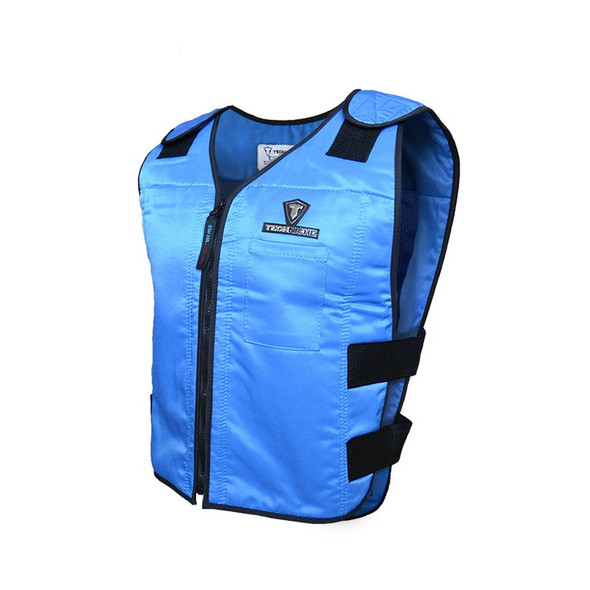

TechNiche Phase Change CoolPax Cooling Vest - 6626
OccuNomix
$137.83 - $137.84The 6626 TechNiche Phase Change CoolPax Cooling Vest will keep you working in the heat. Powered by CoolPaxTM CoolPaxTM is our Phase Change Materi- al (PCM) cooling technology. It uses a non-toxic liquid that freezes at 58oF/14°C and remains...$137.83 - $137.84 -


PIP ANSI Hi Vis Class 2 Yellow Cooling Vest 390-EZ202
PIP
$35.43The 390-EZ202 by PIP is an ANSI Class 2 high visibility yellow cooling vest. Made with Hyperkewl inner cooling fabric and water repellent nylon liner, this lightweight cooling vest is durable and easy to activate. Extended cooling can last up to 5...$35.43 -


PIP Evaporative Cooling Tank Top 390-EZ150
PIP
$28.32The 390-EZ150 by PIP is a black evaporative cooling tank top. Made with a nylon/spandex outer shell and inner hyperkewl cooling fabric with water repellent liner, this athletic design can be worn over a breathable shirt but is designed to be worn...$28.32 -
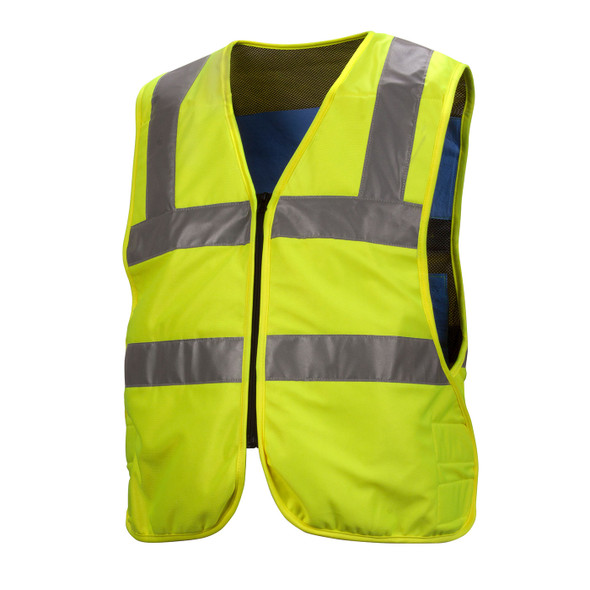
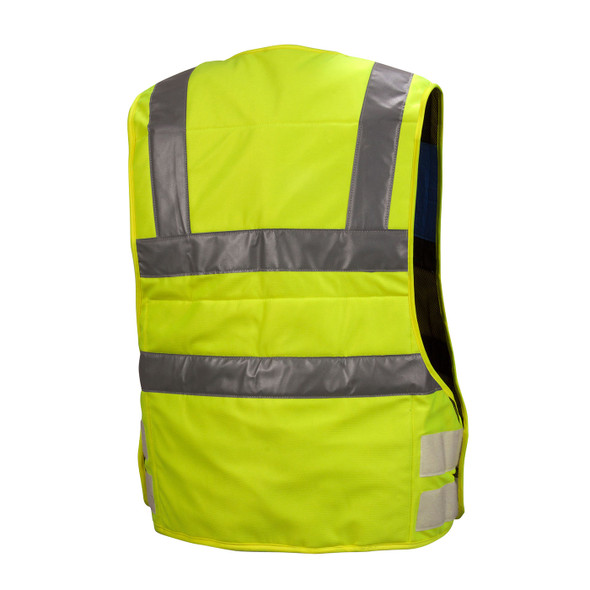
Pyramex Hi Vis Class 2 Yellow Cooling Vest CV200
Pyramex
$40.22The CV200 by Pyramex is an ANSI Class 2 hi vis yellow cooling vest. Made with 100% polyester solid material with quilted fill & mesh, this cooling vest can keep you cool up for to 8 hours. Just submerge in cool water for 1-2 minutes before...$40.22 -


Occunomix FR Cooling Vest PC-VVFR
OccuNomix
$173.79Cooling Vest made with durable, flame resistant treated cotton. Recommended for applications where flame retardant protective clothing is required. Flame resistant treated cotton fabric meets NFPA and ASTM standards and is NFPA 70E compliant. Includes...$173.79 -


MiraCool Nylon Cooling Vest PC-VV
OccuNomix
$159.56The MiraCool PC-VV Cooling Vest is better and safer than Ice or Gel cooling vests. It keeps you cool for up to 4 hours and is worn directly against your body. Great for Hazmat use and great for protection against searing heat work conditions. Extra wide...$159.56 -
img:made-usa-badge.png
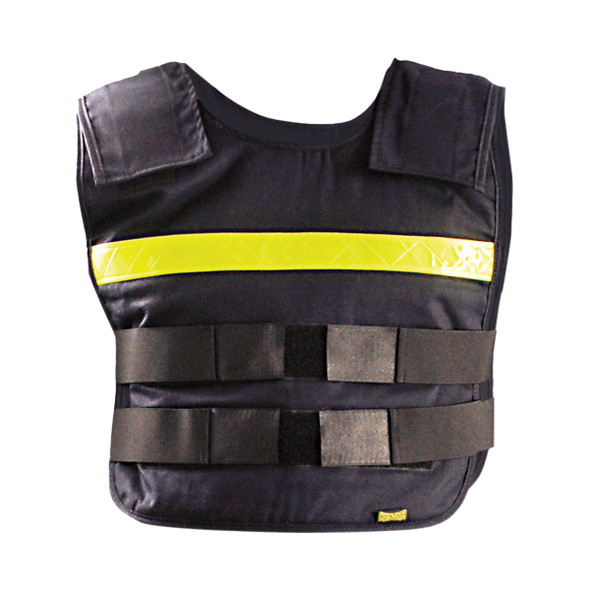

Occunomix FR Classic Cooling Made in USA Vest PC1
OccuNomix
$191.88Phase Change Cooling Vest by Occunomix made with 6 oz Navy Blue flame resistant cotton. Features 1 3/8 Yellow gloss reflective across front and back, adjustable hook and loop strap closure, 3M Thinsulate Insulation and weighs only 3.5 lbs. Cools for 2 -...$191.88 -
Out of Stock, Call: 877-999-4847img:made-usa-badge.png

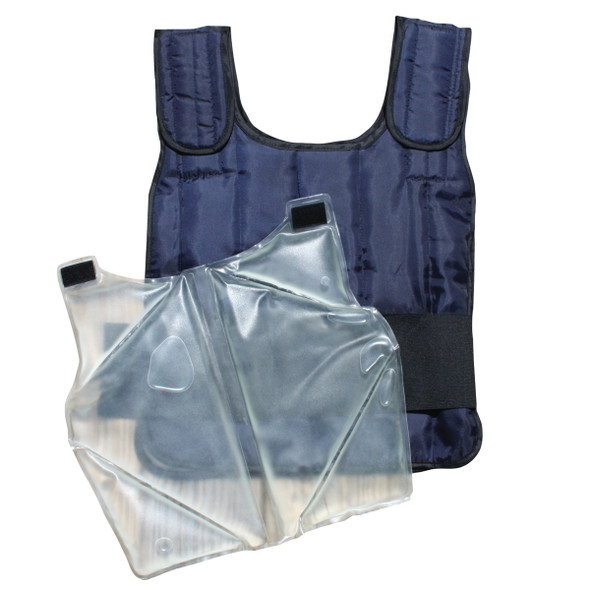
PIP EZ-Cool Vest Phase Change Cooling System with Packs 390-PCVKT1
PIP
$145.27The PIP 390-PCVKT1 - Our personal cooling vest maintains a comfortable 65° F temperature for up to 3 hours. The semi-solid thermal energy storage material (PCM) is designed to absorb heat generated by the wearer. A great solution for working in high...$145.27 -
img:made-usa-badge.png
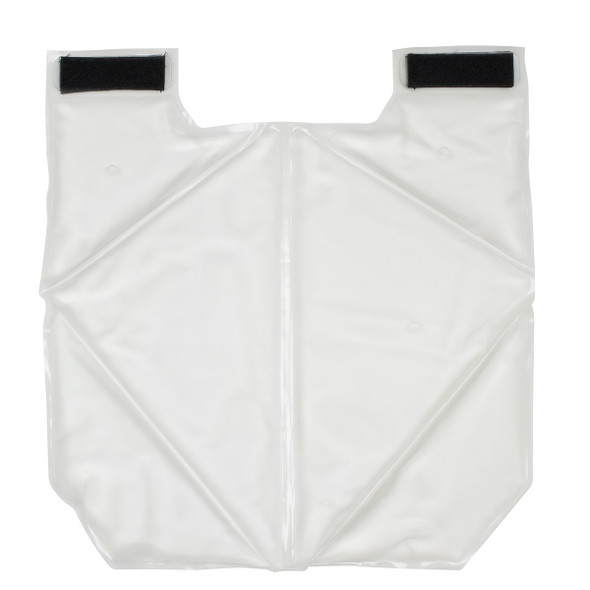
PIP EZ-Cool® Phase Change Replacement Cooling Packs 390-PCVCP1
PIP
$100.75The PIP 390-PCVCP1 EZ-COOL® PHASE CHANGE REPLACEMENT - COOLING PACKS - 2 PACK Replacement Packs for 390-PCVKT1 CARE INSTRUCTIONSWipe outside with a damp cloth. Store flat. FEATURES: 1 set of 2 cooling...$100.75 -


PIP EZ-Cool Max Combination Phase Change & Evaporative Cooling Vest 390-EZHYPC
PIP
$192.46The PIP 390-EZHYPC provides several hours of cooling relief without the bulky/loose fit of similar traditional cooling vests, providing protection from the stress of high temperatures indoors or outdoors. Ideal for construction, welding, mining,...$192.46 -


PIP Non-ANSI Hi Vis Yellow Evaporative Cooling Vest 390-EZ100
PIP
$31.14The 390-EZ100 by PIP is a non-ANSI hi vis yellow cooling vest. This vest requires 1-2 minutes of activation time and can provide 5-10 hours of cooling relief without swelling or slime. Made with a comfortable quilted nylon outer shell with inner...$31.14 -


PIP Premium Phase Change Active Fit Cooling Vest with Insulated Cooler Bag 390-EZSPC
PIP
$197.67PIP 390-EZSPC Premium Phase Change Active Fit Cooling Vest with Insulated Cooler Bag. Offers protection from the stress of high temperatures indoors or outdoors. Ideal for construction, welding, mining, metal working, oil rigging, and industrial...$197.67 -

PIP Replacement Cooling Packs 390-HY099
PIP
$116.25Replacement cooling packs are deployed to provide several hours of cooling relief to reduce fatigue and heat stress. For use with 390-EZHYPC EZ-Cool® Max combination phase change & evaporative cooling vest. FEATURES: Cooling packs are...$116.25 -
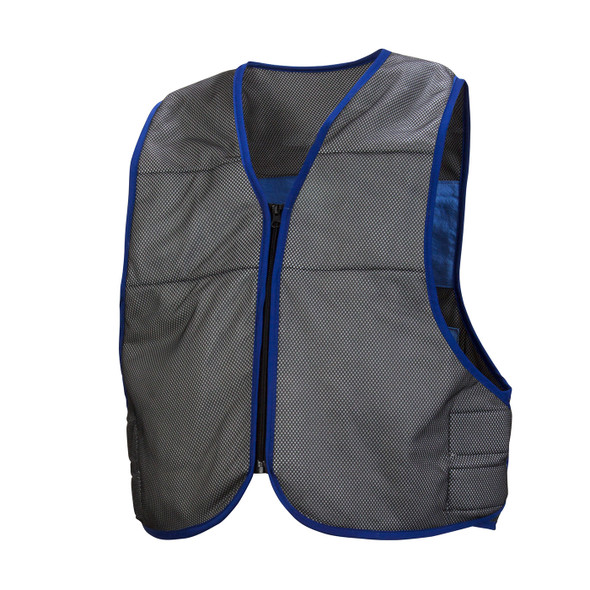
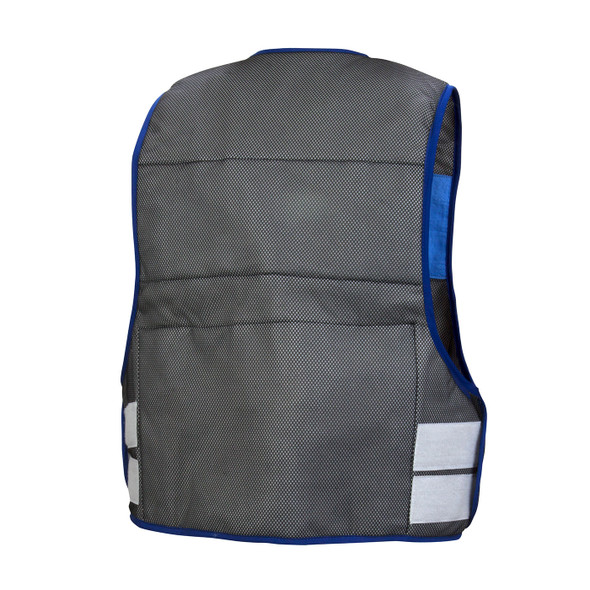
Pyramex Grey Cooling Vest CV100
Pyramex
$34.43The CV100 by Pyramex is a grey cooling vest. Made with 100% polyester solid material with quilted fill & mesh, this cooling vest can keep you cool up for to 8 hours. Just submerge in cool water for 1-2 minutes before wearing and let the PVA...$34.43
Cooling Vests — Frequently Asked Questions
Evaporative cooling vests are soaked in water for 1–2 minutes before wearing. The inner fabric (typically a polymer-based material like HyperKewl® or PVA) absorbs a large volume of water and releases it through controlled evaporation during wear, creating a sustained cooling effect that can last 5–10 hours per activation. These vests are lightweight, require no refrigeration, and can be recharged anywhere there is access to water. They are best suited for dry or moderate-humidity environments, since high humidity slows evaporation and reduces cooling performance.
Phase change cooling vests use removable packs filled with a non-toxic PCM (phase change material) that is chilled or frozen before use. The PCM absorbs body heat as it melts — maintaining a consistent temperature (typically around 58–65°F / 14–18°C) for 2–4 hours before the packs need to be re-frozen. Phase change vests perform consistently regardless of ambient humidity and are the preferred choice for hot, humid environments where evaporative cooling is less effective. The tradeoff is the need for a cooler, freezer, or refrigeration access on-site to recharge the packs. Hybrid vests (like the PIP EZ-Cool® Max) combine both technologies for extended protection.
Cooling duration depends on the vest type, ambient temperature, humidity, and activity level. Evaporative vests in the PIP EZ-Cool® and Pyramex CV lines typically provide 5–10 hours of active cooling per water activation under moderate conditions — higher temperatures and direct sun exposure accelerate evaporation, which shortens duration but also intensifies the cooling effect. The Pyramex CV100 and CV200 are rated up to 8 hours. Phase change vests typically provide 2–4 hours of active cooling before packs need to be re-chilled — the OccuNomix MiraCool PC-VV is rated for up to 4 hours; the TechNiche CoolPax 6626 and PIP EZ-Cool® phase change systems are rated around 2–3 hours at 65°F. For full-shift coverage, workers in phase change vests typically need access to a cooler with spare packs to swap at the midpoint of the shift.
Yes — the PIP 390-EZ202 is an ANSI/ISEA 107-2015 Type R, Class 2 certified hi-vis cooling vest in yellow-green, combining HyperKewl® evaporative cooling with retroreflective tape that meets Class 2 visibility requirements. The Pyramex CV200 is also a Class 2 hi-vis yellow evaporative cooling vest. These vests allow workers on road crews, construction sites, and other environments with ANSI visibility requirements to meet their PPE obligations without sacrificing heat protection. Non-ANSI hi-vis styles (such as the PIP 390-EZ100) are also available for environments where fluorescent color is useful but formal ANSI certification is not required.
Yes. The OccuNomix FR Cooling Vest (PC-VVFR) and the OccuNomix FR Classic Cooling Vest Made in USA (PC1) are both constructed from FR-treated cotton fabric that meets NFPA 70E and ASTM F1506 standards — making them appropriate for arc flash work zones where standard polyester or nylon cooling vests would be prohibited. Both use phase change cooling packs. The PC1 features 3M reflective tape and is manufactured in the USA. Workers in electrical utilities, oil and gas, and other arc flash environments should ensure that any cooling vest worn within the arc flash boundary is rated FR to avoid the risk of the vest fabric igniting or melting in an arc event, which would compound a burn injury.
Yes, with some considerations. Evaporative cooling vests are typically thin enough to be worn under a separate hi-vis vest or light jacket, though the outer layer will slightly reduce airflow and slow evaporation, modestly shortening the active cooling window. Phase change vests are generally bulkier due to the pack pockets and are more typically worn as an outer layer, or with ANSI-certified styles that eliminate the need for a separate hi-vis vest over them. If the cooling vest itself carries ANSI Class 2 certification (such as the PIP 390-EZ202 or Pyramex CV200), it can be worn as the primary hi-vis garment without an additional vest over the top, simplifying the PPE stack. Confirm fit compatibility with your specific outer garments before job-site deployment.
Activation is straightforward: submerge the vest completely in cool water for 1–2 minutes, allow excess water to drip off (do not wring — this can damage the internal PVA or polymer fabric), and then put it on. The vest will feel damp but should not drip excessively after the initial runoff. When the vest stops providing a noticeable cooling effect during the shift, re-soak in water for 1–2 minutes to reactivate — this can be repeated as many times as needed throughout the day. Between uses, air-dry the vest completely before storing to prevent mildew. Most evaporative cooling vests are machine washable on a gentle cold cycle; check the specific product care label. The PVA and polymer crystal fabrics are durable through repeated wash-and-use cycles.
Phase change vests perform significantly better in high-humidity environments than evaporative vests. Evaporative cooling depends on water vapor leaving the fabric surface — when the air is already near saturation (high relative humidity), evaporation slows dramatically and the cooling effect is reduced. Phase change vests, by contrast, cool through conductive heat transfer from the body into the melting PCM packs — a process that is not affected by ambient humidity at all. For outdoor work in humid climates (Gulf Coast, Southeast US, tropical environments) or indoor work in hot, humid conditions (steam operations, food processing, certain manufacturing environments), a phase change vest will consistently outperform an evaporative model. In dry climates with low humidity, evaporative vests typically perform very well and offer the operational simplicity advantage of water-only recharging.
PCM (phase change material) in cooling vests is typically a non-toxic, food-safe substance that melts at a specific temperature — usually in the 58–65°F (14–18°C) range — chosen because it is below skin temperature, which drives the absorption of body heat. Common PCM formulations in safety vest applications include food-grade paraffin wax compounds and salt hydrate mixtures. The PCM is fully encapsulated in sealed flexible packs, so there is no skin contact with the material under normal use. If a pack is damaged and leaks, the material is non-toxic and non-irritating for most people, though the packs should be replaced if punctured. Replacement packs (such as PIP 390-PCVCP1 and 390-HY099) are available separately so vest shells don't need to be replaced if packs wear out over time.
Safety Smart Gear stocks cooling vests from: PIP EZ-Cool® (evaporative vests with HyperKewl® fabric in hi-vis and standard styles, phase change systems with interchangeable packs, and a hybrid combination vest); OccuNomix MiraCool (phase change nylon vests and FR-rated phase change vests for arc flash environments, including the FR Classic Made in USA model); TechNiche CoolPax (phase change vest using non-toxic PCM technology); and Pyramex (evaporative PVA vests in hi-vis Class 2 yellow and standard grey styles). Replacement cooling packs are stocked for PIP phase change systems.
Heat illness — including heat exhaustion and heat stroke — occurs when the body's ability to dissipate heat is overwhelmed by environmental conditions and work exertion. A cooling vest helps by actively removing heat from the torso, where the body's largest blood vessels run close to the surface — cooling blood flowing through the core reduces the overall thermal load on the cardiovascular system. This allows workers to maintain safer core temperatures for longer periods in hot environments, reducing the risk of heat exhaustion and the performance degradation (reduced alertness, slower reaction times) that heat stress causes even before clinical symptoms appear. Cooling vests are most effective as part of a broader heat stress management program that includes hydration, scheduled rest breaks, acclimatization for new workers, and site monitoring for high-heat conditions — they are a supplement to these controls, not a replacement.